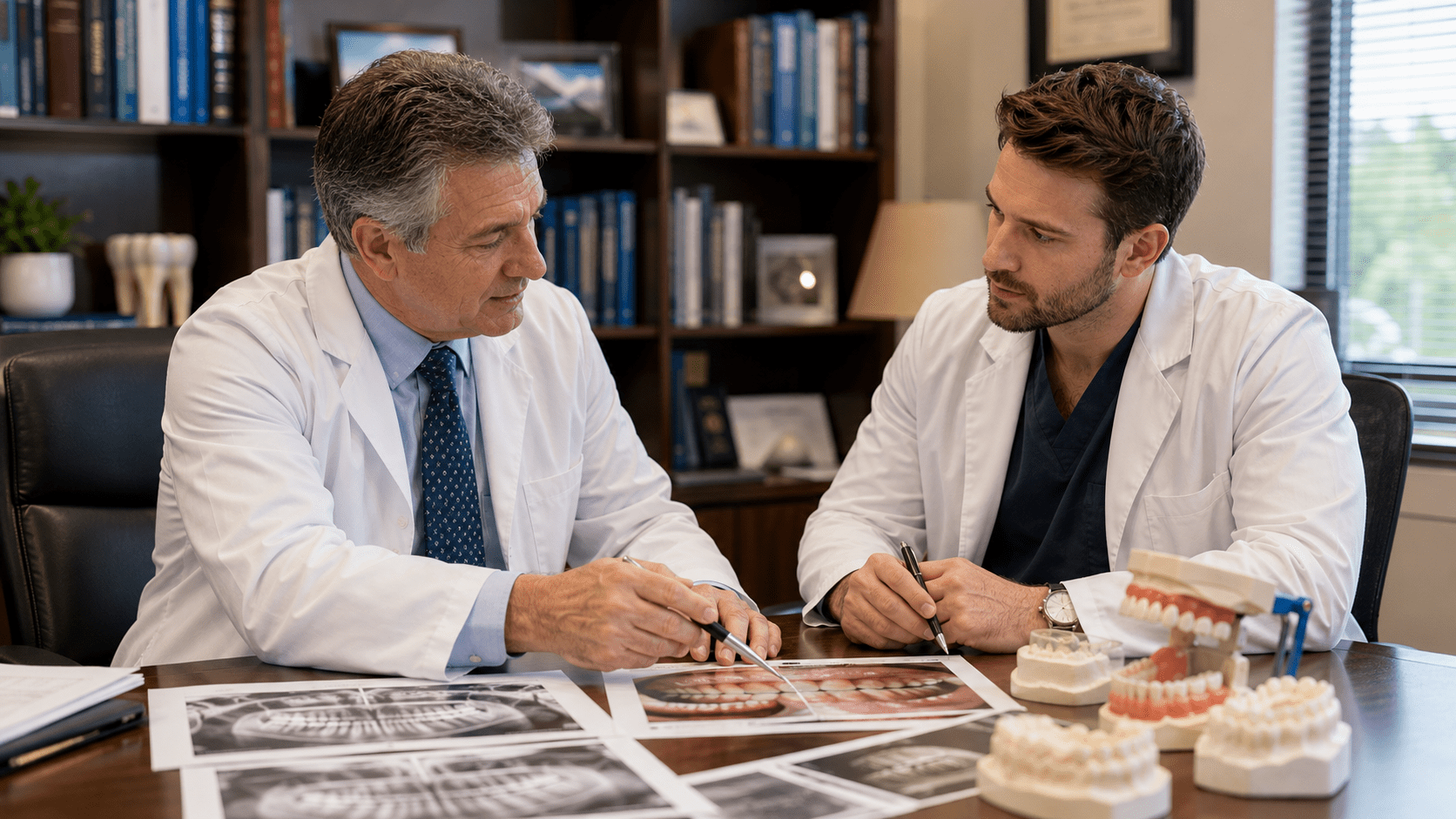
Identify specific people whose work you can actually see, make a narrow and specific ask, and be the kind of person who is easy to help. The dentists who end up well mentored are rarely the ones who asked whether someone would mentor them. They are the ones who sent a well-documented case with a clear question, and then reported back on what happened.
Mentorship after school is not assigned to you. You assemble it, usually from several people rather than one.
Where do you actually find these people?
Local case-review clubs. The most reliable route, because they create the repeated contact a real relationship needs. Ask colleagues what exists near you, since plenty of them are not listed anywhere.
Course faculty. Instructors are approachable in the room and much less so by cold email three months later. Make the connection while you are standing next to them.
The specialists you already refer to. They see your work, they know your patients, and many will talk through a borderline case if you ask them to.
Longer structured programs. Expensive and demanding, but the relationships tend to last because the contact is sustained over time.
Online communities. Useful for quick questions and for finding people worth meeting. Weak for the sustained relationship that changes how you practice.
How do you make the ask?
Be specific and be small.
Rather than asking for mentorship, send one case with complete documentation and one clear question. Here is the case, here are the images, here is my plan and my reasoning, and here is the part I am unsure about. That is answerable in a few minutes and it demonstrates that you will not waste anyone’s time.
Do that a few times and the relationship exists without either of you having to name it.
What makes someone want to keep helping you?
Reciprocity and follow-through, mostly.
Report back on what happened. Closing the loop is the easiest way to be remembered well.
Come with your own analysis first. Asking what someone thinks of your reasoning is a lighter request than asking them to do the reasoning for you.
Respect the format they prefer. Some will look at photographs on a phone; some want a proper presentation. Ask which.
Offer to pay when payment is appropriate. Structured mentorship and formal case review are professional services with real opportunity cost behind them.
Be useful in return. Refer, share what you learn, run the meeting nobody wants to run, take the administrative work off someone’s plate.
How should case review actually work?
Bring your failures rather than your best work. Nobody can help you with a case that went well.
Useful review has complete records in front of everyone, your reasoning stated before you hear theirs, a specific question rather than a general request for thoughts, follow-up documentation showing how it turned out, and a regular cadence. A predictable monthly meeting beats an occasional burst of enthusiasm.
Photograph your cases as a matter of routine, including the ones you have no intention of presenting. You cannot go back and capture records after the fact, and the case you most need help with will be one you did not think to document at the time.
What if there is nobody local?
Build a peer group instead. A few dentists at a similar stage, meeting on a fixed schedule and reviewing each other’s work honestly, does a great deal of what a senior mentor does and is far easier to arrange. It requires discipline about actually meeting and actually bringing cases.
Bring in a senior voice periodically. Invite a specialist to a meeting. Many will come, and it costs you dinner.
FAQ
Is it appropriate to pay for clinical mentorship?
Yes. Structured review and over-the-shoulder days in someone’s practice consume time they would otherwise spend producing. Offering to pay is appropriate and often produces a better-defined arrangement. Clarify scope, format, and expectations in advance the way you would with any professional engagement.
How do I find a case-review club near me?
Ask your specialists, your lab, and your local dental society, in that order. Labs know which clubs are active because they often support them. Many good clubs never advertise and take members by introduction, so a direct personal ask works better than searching online.
What if my mentor’s approach differs from what I was taught in school?
Ask why, specifically, and listen for reasoning you can follow and check. A good mentor can explain what led them there. If the only available answer is that it works for them, weigh it accordingly and go read the source material yourself before you change anything.