A 2019 market report projects that dental implants will be a 7.955 billion dollar industry by the year 2024. Increased focus on oral care, growing global geriatric populations, and a rising number of injuries from car accidents and sports are fueling the staggering need for dental implants.
Yet today, only 10% to 15% of general dentists in North America are trained in implant dentistry, falling ominously shy of the worldwide standard of 80% to 90%.
When you consider that placing 10 implants per month could bring in an additional $480,000 to a dental practice, it behooves a dental professional to add implant dentistry to their core competency. When seeking out an implant dentistry course, what should you look for?
- Quality versus quantity — The course should focus on instilling total comprehension and familiarity, rather than on home many implants you’re going to place during the course period. You want to walk away with confidence in your ability to place implants correctly. That takes full comprehension; it’s not a numbers game.
- Customization — The course should take into account your ability and your comfort level as well as what you want to learn. Perhaps you’re new to implant dentistry—or you’re already proficient in placements and ready to start learning more advanced procedures like lateral windows, ridge augmentation and ridge splitting, sinus lifts, bone grafting, or advanced suturing techniques. A “one-size-fits-all” approach will fall short of giving you the tools you need to excel in implant dentistry.
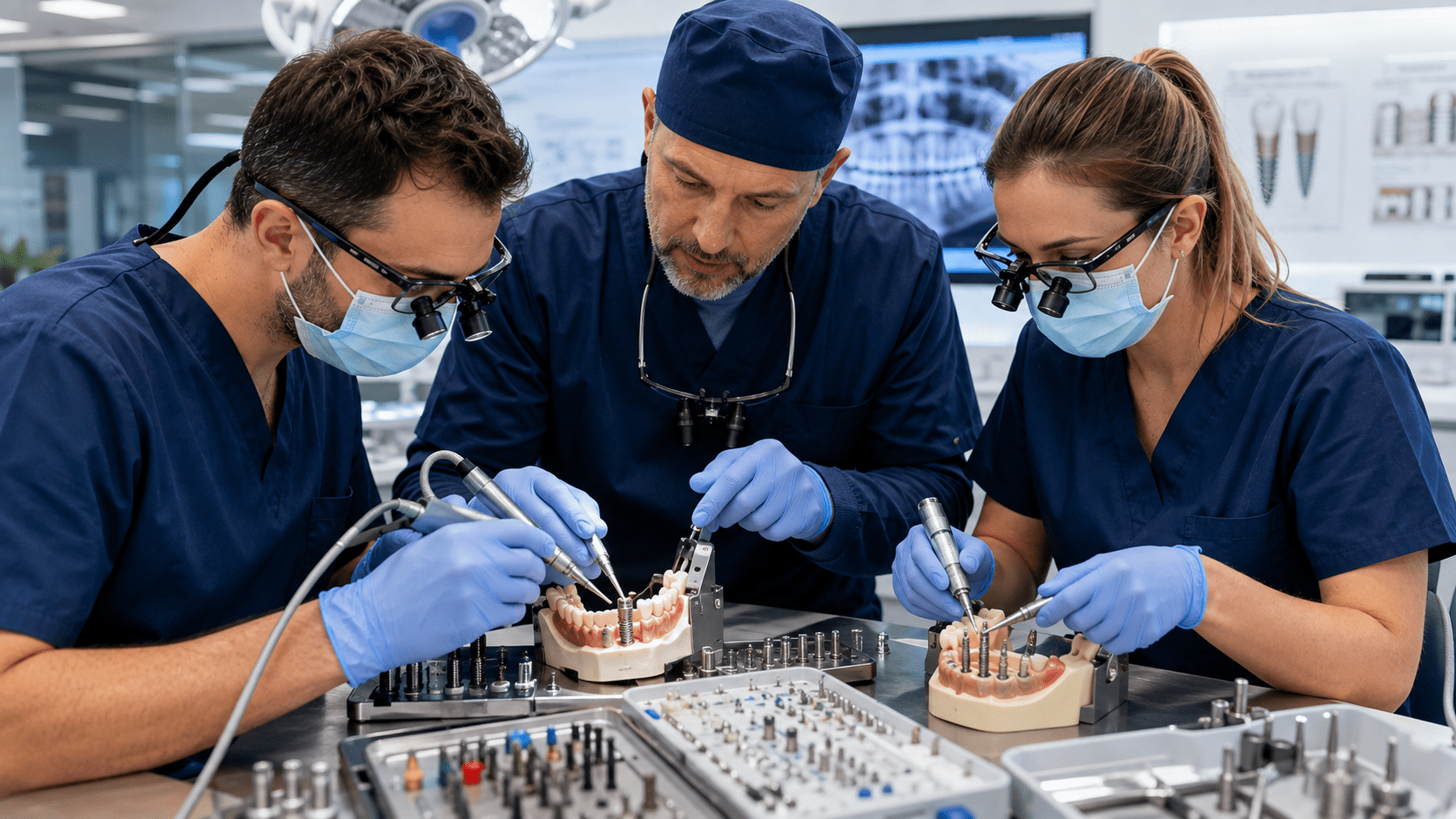
- Hands-on — You’ll want to spend most of your time with your sleeves rolled up, placing implants—not sitting in lecture after lecture for days on end. While the theory is part of any training course, the majority of the time should be spent on application.
- Small format — Can you ask your instructors for assistance or is the class too large for personalized attention? A small format course will keep you “up close and personal” with your instructors so you can learn, practice, and perfect the techniques you’re learning without hesitation or delay.
- Ongoing resource — The program provider should continue to be an educational resource well after the course period, allowing participants to discuss questions or concerns that might arise as they begin to implement implant dentistry into their practice.
- (BONUS!) Strong alumni network — Although not mandatory, an implant program with a strong alumni community can help facilitate future professional and educational opportunities.
Implant Success Today (IST) answers the growing demand for implant dentistry education. Headquartered in La Crosse, Wisconsin, Implant Success Today operates implant facilities out of San Pedro in the Dominican Republic, enabling international dental professionals to participate in the program.
Implant Success Today offers a five-day hands-on surgical training course that is instructed by an expert team of implantologists, oral surgeons, and periodontists. Small format courses of up to 12 dental professionals at a time are tailored to what each participant wants to learn and whether they’re new to implants or returning to learn more advanced procedures.
Upon course completion participants have a thorough understanding of implant systems and protocols and confidence in incorporating implant placement and related surgeries into their practice. Implant Success Today also provides complementary tools including a free surgical and drill kit to help participants immediately implement their new skills upon their return home.
Implant Success Today is an AGD-approved CE provider. Each participant is awarded 38 CE hours at course completion (6 hours of lecture and 32 hours of participation) under AGD subject code 690.
- To learn more or to register for Implant Success Today courses, click here.
- For the next scheduled Implant Success Today training course, click here.
