A patient walks into your office with no idea what good dentistry looks like. They’ve got nothing to compare it to except the last office they went to, which was probably running the same playbook.
So whatever happens in the first three visits becomes their definition of dentistry.
Hygienist rushes? They learn a cleaning is a formality. Nobody ever shows them a photo of their own tooth? They learn dentistry is something you argue about with the front desk. Treatment mentioned on the way out the door? They learn it must not be urgent.
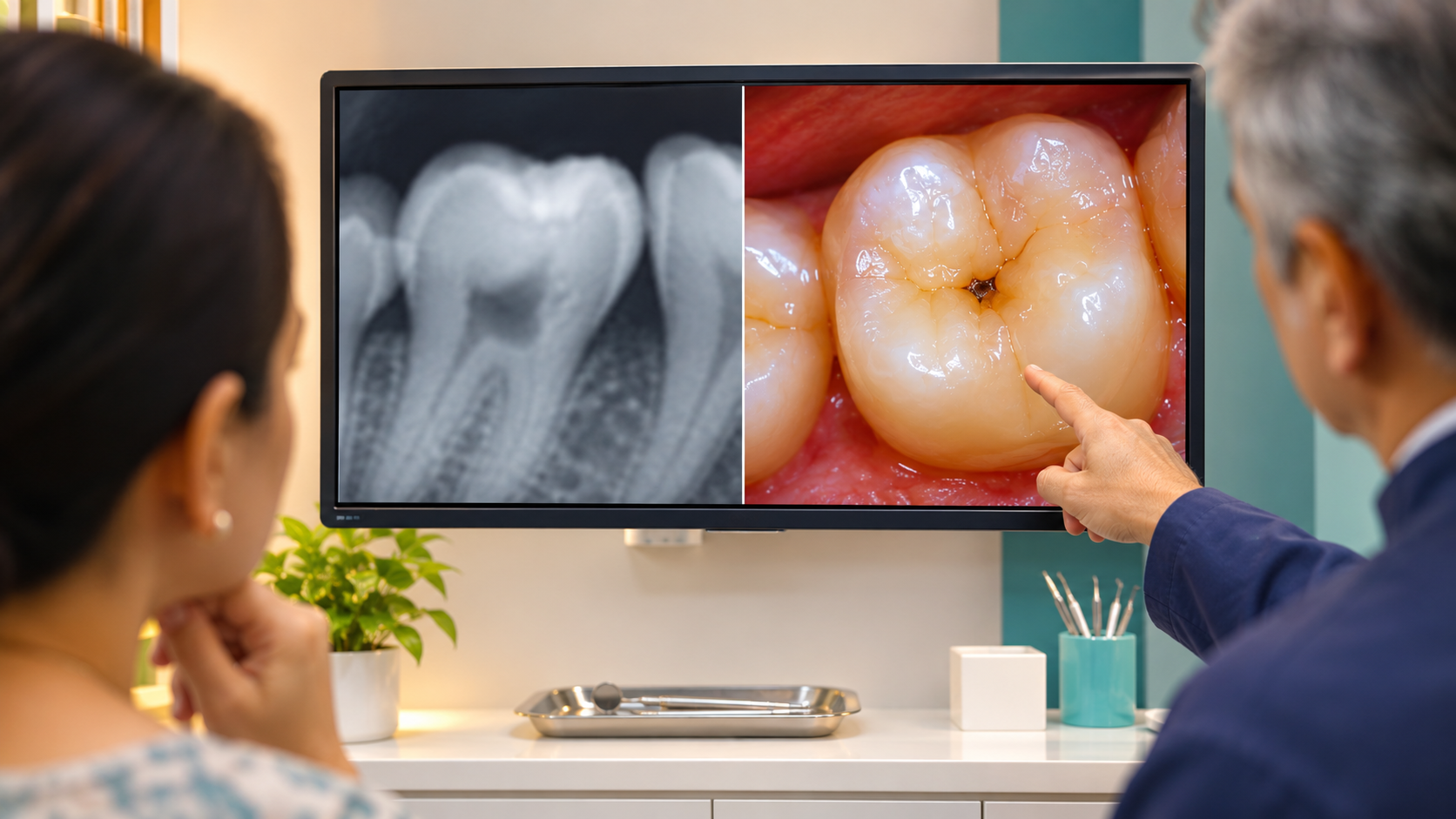
Someone sits with them, shows them what you’re seeing, explains what waiting costs? Completely different education.
You’re not selecting for good patients. You’re training whoever walks in.
Which is actually good news, because you control the training and you don’t control the demographics.
If you change one thing this month, make it intraoral photos on every new patient exam, up on the screen while you talk.
Nothing moves case acceptance faster than a person looking at their own mouth. Not a better script, not a payment plan, not a brochure.
Your policies are teaching them too, and the apology is the lesson.
Watch your front desk when someone shows up twenty minutes late. “I’m so sorry, we’ll try to squeeze you in.” That apology just taught the patient your schedule is negotiable. Next time it’s twenty five minutes.
You didn’t set a policy. You made an opening offer.
The practices that run on time say it plainly. “We hold appointments for fifteen minutes. After that we reschedule, because the patient after you built their day around this too.” Not rude. Respectful of everyone including the person who showed up on time.
Here’s the test: if your team can’t say the policy out loud in one sentence without softening it, you don’t have a policy. You have a preference.
And when they say no to treatment, they’re almost never saying no to the treatment.
Four things are usually behind it, and only one is money.
They don’t believe there’s a problem, because nothing hurts. You saw decay on the x-ray. They saw a grey blob.
They don’t trust it’s necessary yet. Somebody told them a dentist once recommended work they didn’t need, and that story is sitting in your chair right now.
They don’t understand what waiting costs. You said “let’s watch that.” They heard “it’s fine.”
And sometimes it is money. But money objections are often the polite version of the first three. It’s easier to say I can’t afford it than to say I don’t believe you.
So the fix isn’t a better closing line. It’s the order you do things in.
Proof first. Show the photo, show the same tooth on someone who waited two years, say plainly what it costs now and what it costs then. Then talk about payment, once they actually want the thing.
Most practices run that backwards, lead with the estimate, watch the patient flinch, and decide people in this town can’t afford dentistry.
The patients were never the variable.