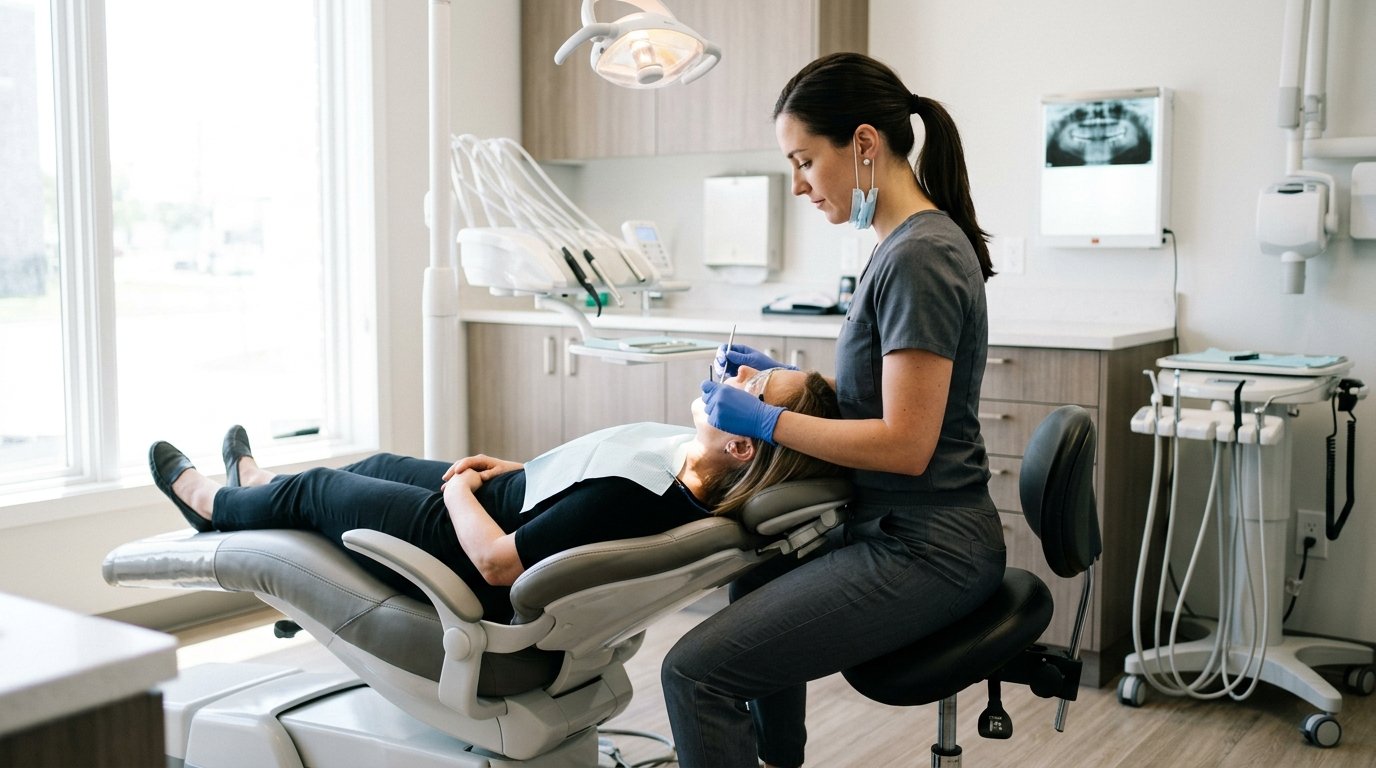
If your neck and shoulders ache at the end of a clinical day and feel better by morning, the most useful thing you can do is describe that exact pattern to a physician or physical therapist. They can tell you what is going on in your case, which is not something you can settle from an article or a forum thread. While you wait for that appointment, the part that is genuinely yours to work on is your setup and your habits at the chair.
None of this requires pushing through anything. Discomfort that shows up predictably is information, not a test of character.
What is worth noticing before you change anything?
Whoever assesses you will ask questions you probably cannot answer from memory. Spend a couple of weeks paying attention and write short notes at the end of each day.
Note when the ache starts and when it eases, which side is worse, and whether one operatory or one type of procedure is reliably involved. Note whether shorter days feel different, and whether it is gone when you wake up or still there.
Bring that with you. A page of specifics changes the quality of the conversation.
What can you adjust at the chair?
These are setup questions, not treatments. Try them and pay attention to what changes.
- Move the patient rather than yourself. Chair height, headrest angle, and how far you rotate the patient decide how much you have to bend to see.
- Use indirect vision more than you currently do. A lot of hard looking happens because a mirror was available and went unused.
- Watch your elbows. If your upper arms keep drifting away from your sides, something upstream is usually set wrong.
- Vary what you do across the day if the schedule gives you any say. A morning of identical procedures gives you no variation at all.
- Stand up and change position between patients. It costs nothing, and you can judge for yourself whether the end of the day feels different.
How should you think about equipment?
As a fitting problem. Magnification, stools, and standing platforms all have committed advocates, and none of that tells you what suits your body, your operatory, and your working distance.
If you wear loupes, have the fit re-checked rather than assuming the settings you were sold years ago still apply. If you are shopping, insist on being measured at your own stool height. Poorly fitted optics hold your sightline wherever they were built for, which is worth knowing before you spend the money.
A physical therapist or a clinician trained in workplace assessment can watch video of you working and tell you what they see. That is a better use of an hour than a new stool chosen on the recommendation of someone with different proportions.
When should you stop troubleshooting and get seen?
Some things belong in front of a clinician promptly rather than in a list of adjustments. Pain that wakes you at night. Pain that travels down an arm. Numbness, tingling, or a change in your grip. Anything that has stopped settling overnight, or that feels different in character from what you are used to.
Do not work through those, and do not manage them out of the medicine cabinet on an ongoing basis. Get an opinion while your options are still wide.
What does the long view look like?
Ask, early, what conditioning makes sense for you given how you work. That is a question for a physician or physical therapist who has actually assessed you, not something to copy from a colleague or a video.
The dentists still working comfortably late in their careers generally did not out-tough anything. They asked sooner, and they adjusted their equipment instead of adapting to it.
FAQ
Should I accept some neck and shoulder discomfort as part of the job?
You do not have to accept anything without an opinion first. Discomfort that is predictable, worsening, or changing in character is worth a proper assessment by a physician or physical therapist. They can tell you what you are dealing with and what is reasonable to do about it in your situation.
Are loupes worth it for my posture?
Treat it as a fit question rather than a yes or no. Optics built around someone else’s working distance hold your head wherever they were designed to. If you already wear them, get the fit re-verified. Ask whoever fits them to measure you at your own stool height, in your own operatory.
What should I bring to the appointment?
A couple of weeks of short notes: when it starts, when it eases, which side, which procedures, whether it clears overnight. Bring a phone video of yourself working if you can get one. Specifics let a clinician assess you instead of guess.